

TMJ Disorders
Symptoms, causes, and treatment options for temporomandibular joint dysfunction.
TEMPOROMANDIBULAR JOINT
Clicking or popping sounds from your jaw,
or pain when opening your mouth?
TMJ disorders encompass pain, sounds, and limited mouth opening around the joint in front of the ear. Early diagnosis and treatment are important, as neglect can lead to chronic pain and joint damage.
SYMPTOM CHECK
Do you have these symptoms?
If even one applies, we recommend a specialist evaluation.
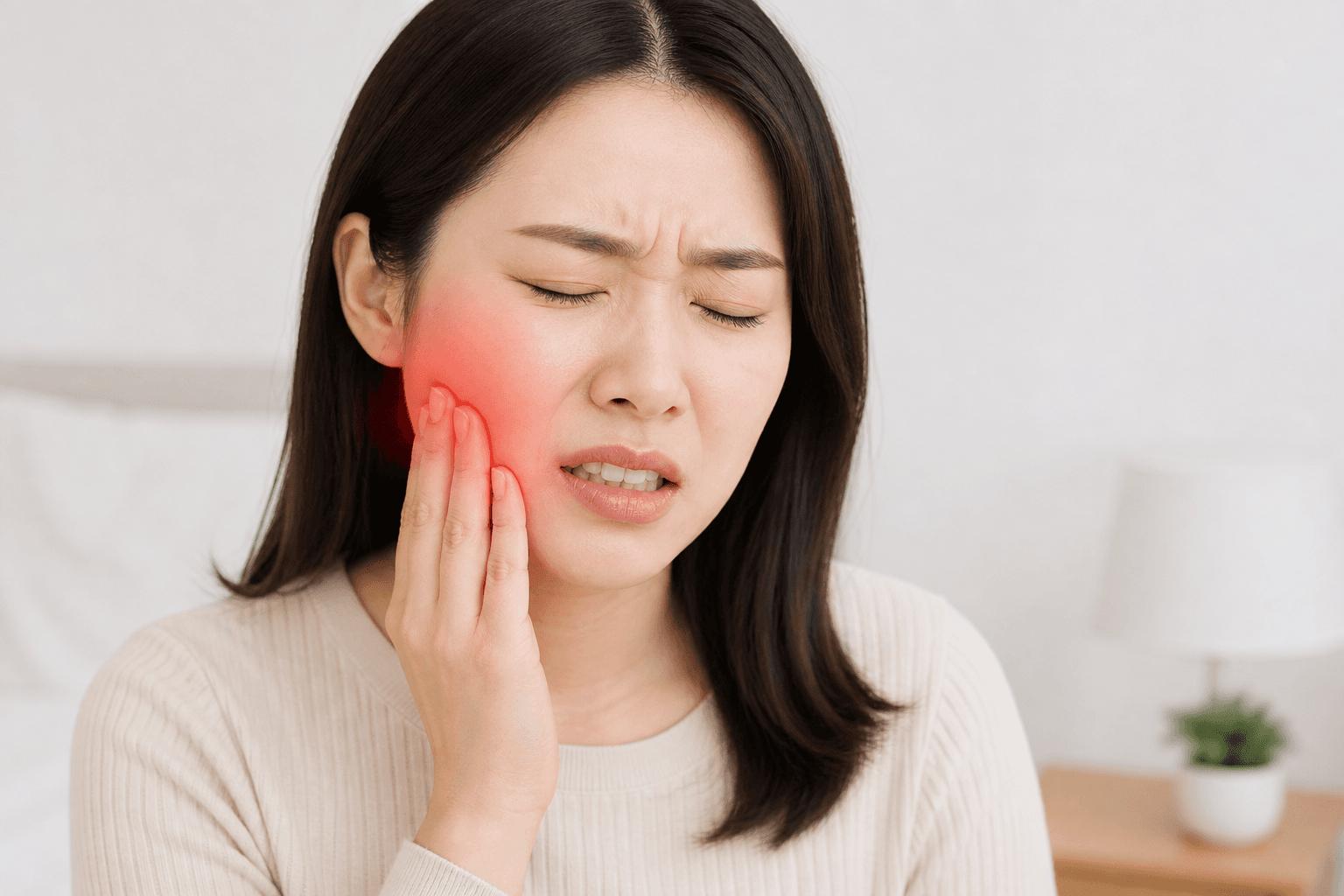
Clicking or crunching sounds when opening or closing your mouth.
Pain around the TMJ area or in front of the ear.
Mouth does not open fully, or opens to one side.
Pain when chewing, making it difficult to eat hard foods.
Headaches and neck/shoulder pain accompanying jaw symptoms.
Tinnitus or a feeling of fullness in the ear.
TREATMENT
ESAM TMJ Treatment Methods
Treatments are combined based on the cause and severity.
DIAGNOSIS
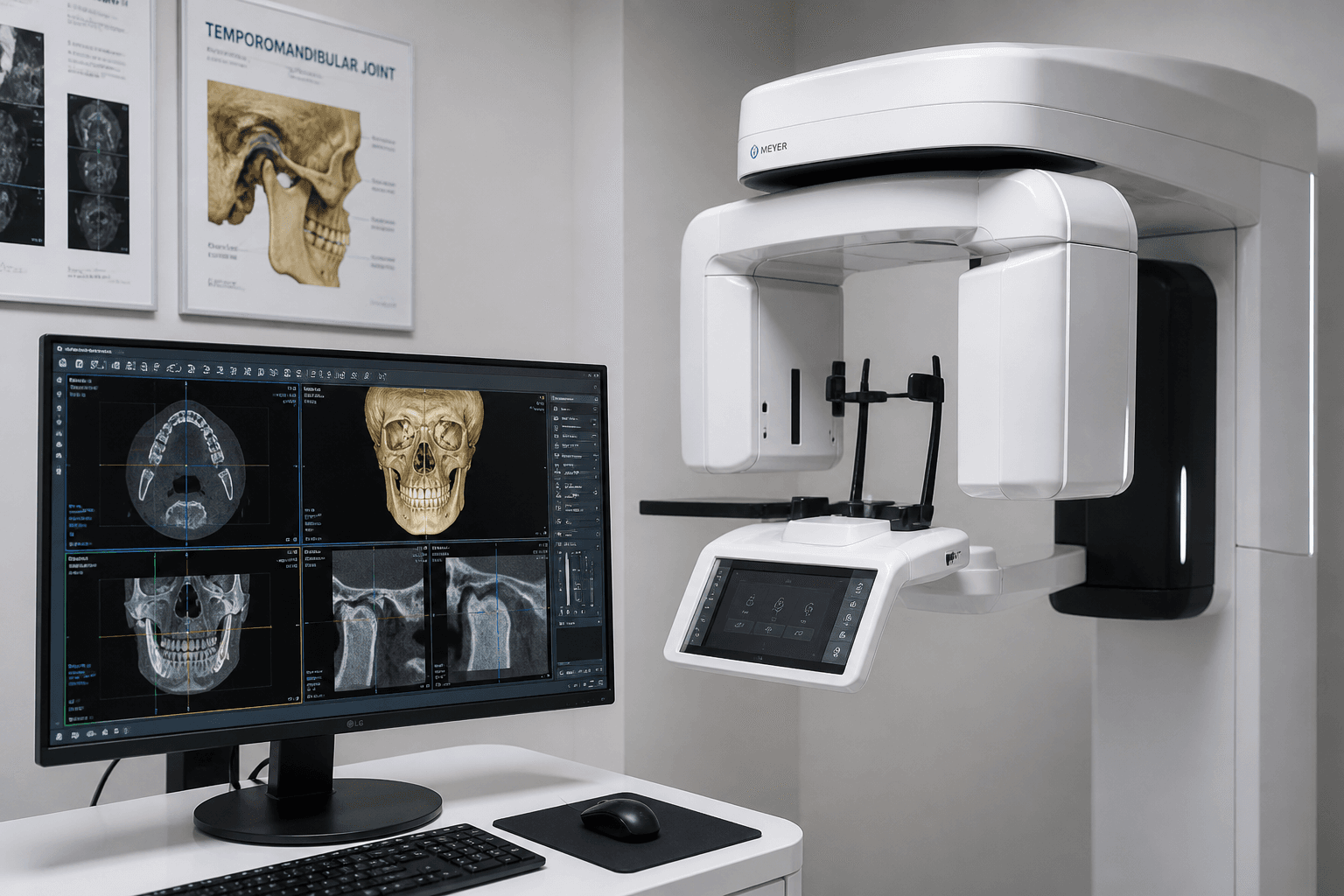
Precise Diagnosis
We analyze the TMJ disc position, condyle morphology, and bone changes in 3D — details that are difficult to see on standard X-rays. Accurate diagnosis is the foundation of proper treatment and reduces unnecessary procedures.
MEDICATION
Medication
NSAIDs, muscle relaxants, and anxiolytics are used based on individual conditions to manage acute and chronic pain.
BOTOX
Xeomin · Coretox
Botox Treatment
Botox injected into the overly tense masticatory muscles reduces muscle tone. It is also effective for reducing hypertrophied masticatory muscles from bruxism and clenching. To minimize patient tolerance, ESAM uses the well-known products Xeomin and Coretox.
PHYSICAL THERAPY
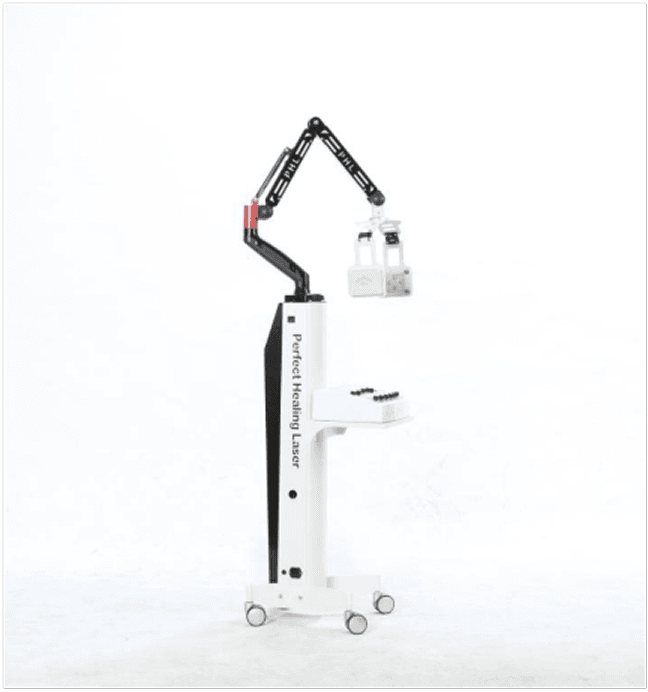
Physical Therapy
Specialized physical therapy equipment relieves tension in the muscles around the TMJ and promotes circulation. Resolving repeated muscle tension helps reduce pain and restore muscle function.
ORAL APPLIANCE
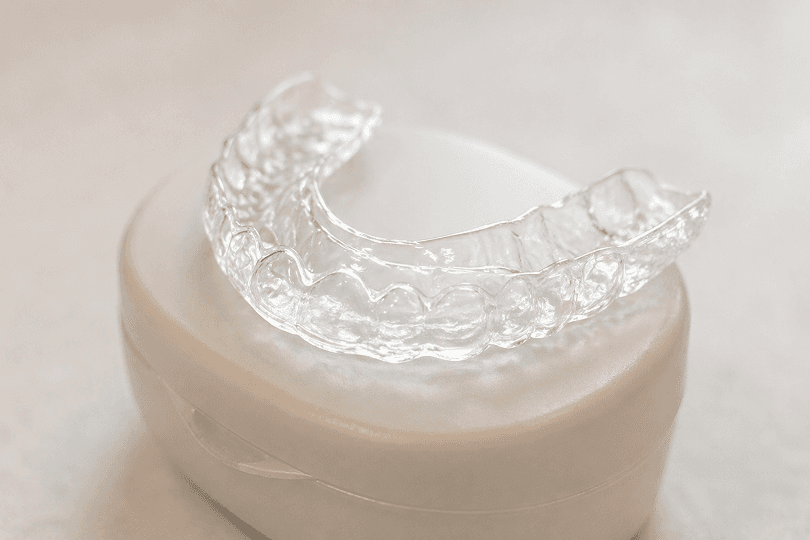
Thermosplint
Oral Appliance Therapy
A custom-fitted oral appliance distributes the load on the TMJ and stabilizes the disc position. It prevents damage to the masticatory system, teeth, and alveolar bone from nocturnal bruxism and clenching. ESAM uses a Thermosplint made of a special new material for greater comfort.
SELF CARE
Self-care
Self-care is extremely important for TMJ disorders!
Habit Modification
Reduce habits like resting your chin on your hand, eating hard foods, and clenching your teeth.
Self-stretching
Relieve muscle tension with TMJ and neck stretches guided by your specialist.
Heat Therapy
Warm compresses relax muscles, reduce pain, and promote circulation.
FAQ
Frequently Asked Questions
Can TMJ disorders heal on their own?
In mild cases, symptoms can improve with self-care alone, but if disc displacement or bone changes are present, symptoms worsen with neglect. If sounds or pain persist for more than 2 weeks, specialist evaluation is recommended.
How long does treatment take?
It varies by individual, but acute pain usually eases within a few days. Chronic pain, osteoarthritis, or disc displacement may require 6 months to several years of treatment.
How often do I need botox treatments?
Generally every 4–6 months, though this varies by individual. As muscle tension eases, the intervals often lengthen. ESAM uses Xeomin and Coretox to minimize tolerance in patients requiring regular botox injections.
Must I always wear the oral appliance (Thermosplint)?
It is worn mainly during sleep, as the main goal is to reduce joint load from bruxism and clenching and stabilize the disc position. Daytime wear may also be recommended depending on symptoms, and the specialist will guide individual wearing schedules.