

Complex Implant Cases
Specialist care for bone grafting, sinus lifts, and other advanced implant scenarios.
ADVANCED IMPLANT
Being told you have insufficient bone?
Let us re-evaluate at Esam
Bone grafting is not a reason to give up on implants — it is the preparatory process that makes implants possible. We establish a precise plan using 3D CT analysis and predict outcomes before surgery.
I was told implants are difficult because I have insufficient bone
My gums have significantly receded after a tooth extraction long ago
I was told upper molar implants would be difficult
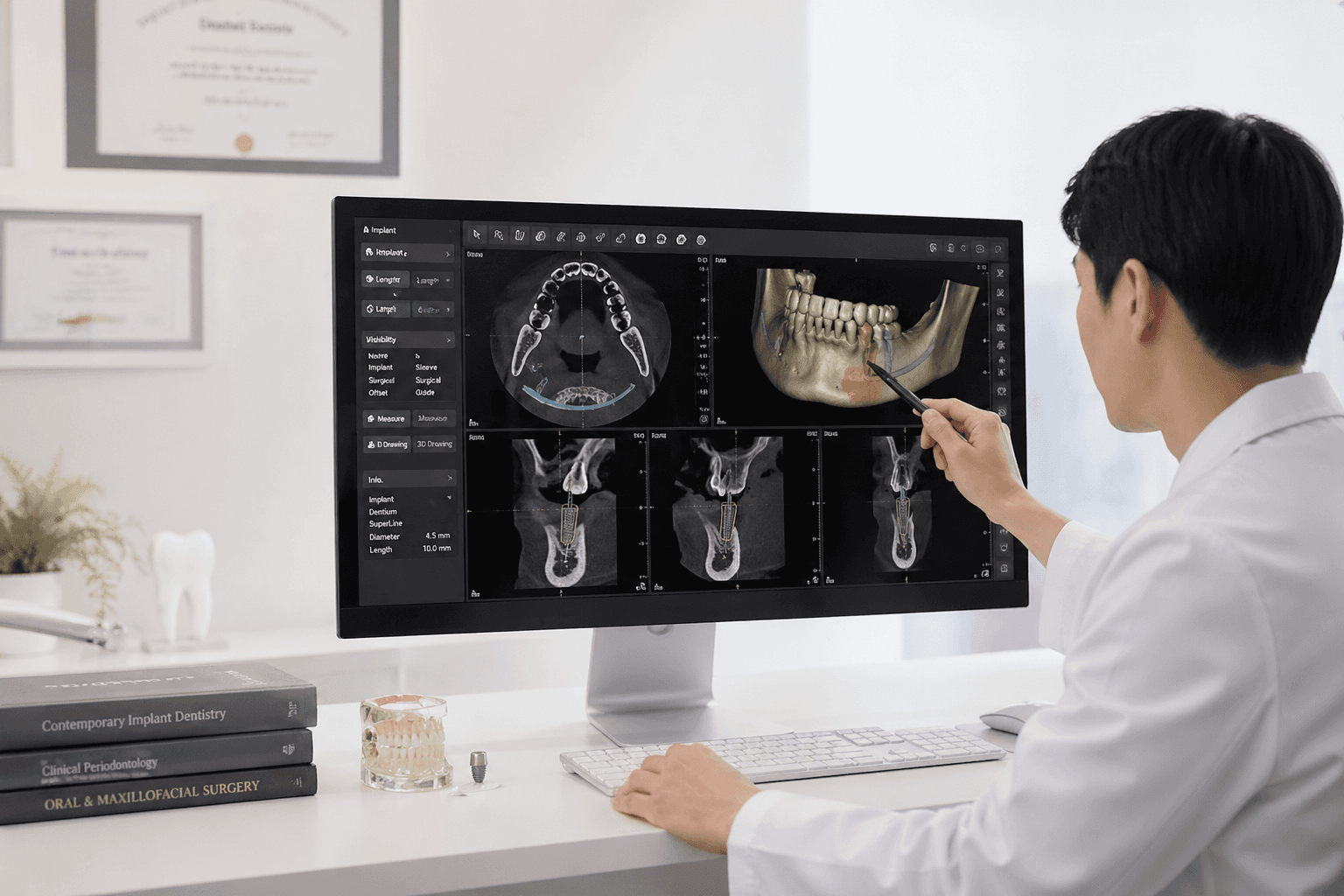
The plan before surgery determines the implant outcome
After precisely analyzing bone condition, gum thickness, and nerve positions with CBCT, we establish the bone grafting method, scope, and implant placement plan together.
Jawbone height, width, and density are measured in three dimensions
Distances from nerves and blood vessels are confirmed in advance
Whether bone grafting is needed and its scope are determined
A plan for temporary teeth is also established

OUR APPROACH
We can do it all, but not for everyone
High-difficulty cases require careful judgment. Esam Dental confirms feasibility through precise examination first, and proceeds only when treatment is appropriate.
If bone or gum grafting is needed, we proceed meticulously. If the current condition makes it inadvisable, we say so honestly.
GRAFT TYPES
Types of Bone & Gum Grafting Available at Esam
The appropriate method is selected and applied based on the individual case.
Sinus Lift
Insufficient bone in upper molar area
When the bone around the upper molars is insufficient, bone graft material is placed in the sinus space beside the nose to create the space needed for implant placement. This can be applied even when bone height is extremely limited.
i-PRF Autologous Blood Application
Using growth factors from the patient's own blood
Growth factors (i-PRF) obtained by centrifuging the patient's own blood are used together with bone graft material. This helps accelerate regeneration of the grafted bone, reduce inflammation, and shorten recovery time.
Guided Bone Regeneration (GBR)
Reinforcing localized bone deficiency
Bone graft material and a membrane are applied at the implant placement site to guide bone regeneration. In relatively simple bone deficiency cases, this can be performed simultaneously with implant placement.
Gum Graft
Reinforcing thin or deficient gum tissue
When gum thickness is insufficient or has significantly receded after tooth loss, connective tissue grafting reinforces gum thickness and volume. This simultaneously improves long-term implant stability and aesthetic results.
Block Bone Graft
Reconstructing severe bone defects
When the bone defect area is too wide for particulate graft material alone, autologous or allogeneic bone blocks are grafted to restore volume. Implant placement proceeds after a 3–6 month healing period following the graft.
PROCESS
Advanced Implant Treatment Process
CBCT Precision Analysis
Bone condition and nerve/vessel positions are assessed in three dimensions. Bone graft scope and surgical method are determined at this stage.
Treatment Planning Consultation
Based on CT analysis, detailed information is provided on the grafting method, schedule, and cost. What will be done at each stage is fully explained before proceeding.
Bone Graft Surgery
Depending on the case, this is performed simultaneously with implant placement or after a healing period following the graft. Using i-PRF together accelerates recovery.
Implant Placement
After the graft site has stabilized, implants are placed at the planned positions. A digital surgical guide accurately realizes the planned angle and depth.
Final Crown Placement
The final crown is fabricated and placed after osseointegration. Bite and aesthetics are verified and adjusted, then maintenance guidance is provided.
FAQ
Bone Graft Implant FAQ
Is it true that bone grafting makes implants impossible?
This is not true. Bone grafting is a prerequisite that makes implants possible. However, the method and duration vary depending on the degree of bone deficiency. Cases rejected by other clinics are re-evaluated after CT analysis.
When can implants be placed after bone grafting?
It depends on the graft scope. Minor GBR can be done simultaneously with implant placement. For larger procedures like sinus lift or block bone graft, implant placement proceeds after waiting 3–6 months for bone formation.
Is gum grafting always necessary?
When gum thickness is less than 1.5mm or has severely receded after tooth loss, proceeding without a gum graft may cause long-term gum recession around the implant. Whether it is needed is determined by examination results.
Is bone graft surgery painful and difficult to recover from?
Intraoperative pain is minimized with local anesthesia. Post-surgical swelling and discomfort usually subside within 3–5 days. Recovery is typically faster when i-PRF is used together.